Act I: Gurgles and Glories (or, The Inlet Anxiety)
Barry arrived with purpose.
Installed beside Facility Alpha (the greenhouse), he was not merely a receptacle but a vessel of destiny. Charged with the sacred duty of collecting rainwater, Barry the water butt stood alert, corpulent, and slightly bashful beneath the guttering. And when the first rains came, he responded: a shy burble here, a tentative glug there—like a nervous baritone warming up backstage.
Worse still: the inlet—or, as Barry himself refers to it in moments of vulnerability, his butt plug.
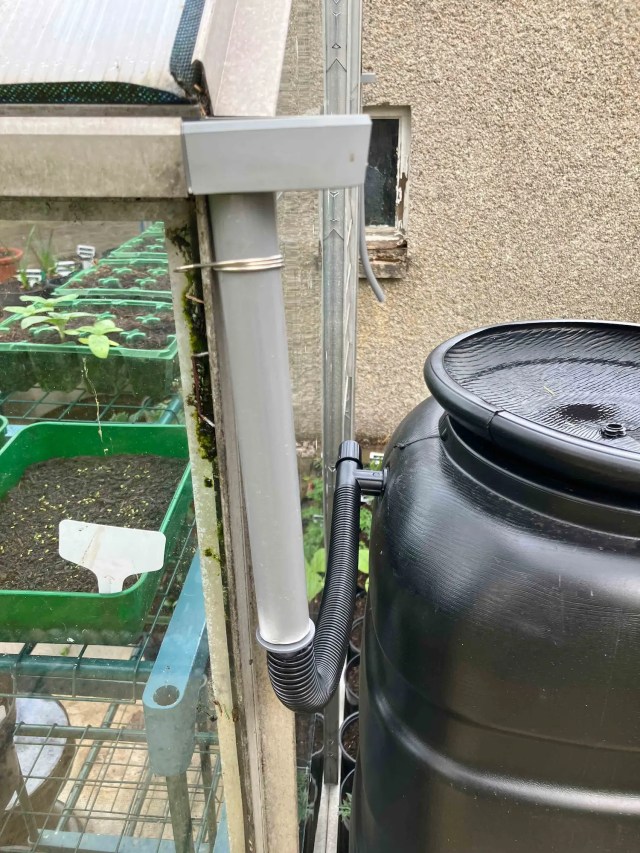
It was narrow. Paltry. Miserly. A mean little hole at the top, barely wide enough to admit a drizzle, let alone a downpour. Barry, whose dreams were built on torrents and flash floods, found himself stifled. The rain arrived but trickled past. His belly ached with emptiness. He blamed the design. He blamed the sky. He blamed Puff—his flamboyant border-mate (Rheum palmatum var. tanguticum), known for dramatic foliage, seasonal mood swings, and a collection of wigs.
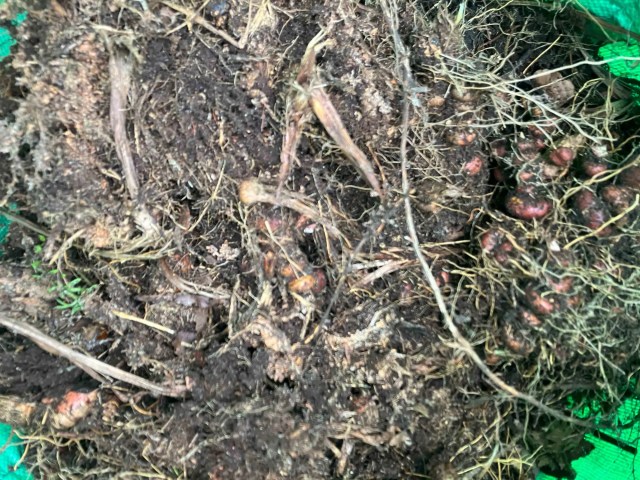
The season had begun. Below ground, rebellious crocosmia were being exhumed, like golden mummies of the Bahariya Oasis, from the trenches of My Name is Red border. Above, Barry muttered into his pipework, waiting—aching—for a storm worthy of collection.
Act II: SPAWNOGRAPHY — Of Drips, Tadpoles, and the Coming War
The pond had stirred.
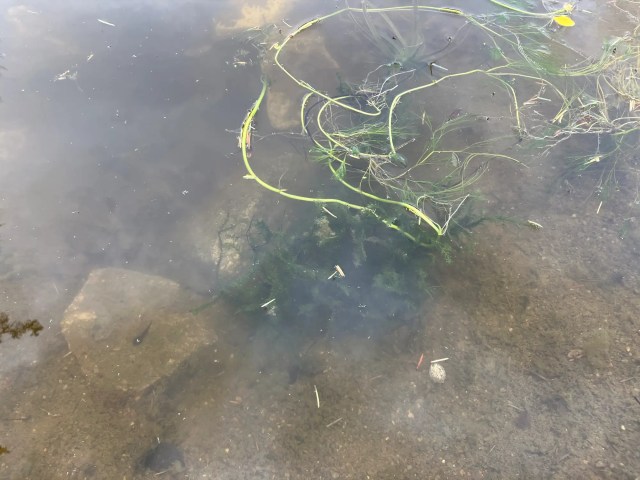
Beneath the weed, among the sunken stones, tadpoles—obsidian little commas of war—gathered. The first princes of the season, bred not for ornament but for combat. For in the great theatre of the cultivated garden, no enemy is more insidious than the slug orcs. And no weapon more reliable than the frog.
Barry knew this. He had heard it whispered: the pond was not for peace—it was a hatchery.
And so, despite his narrow inlet and leaky shame, Barry took his post beside the pond with renewed seriousness. His mission? To supply water to the troops in times of drought. To ensure that when the slug orcs came—and they always came—the garden would be defended not just by fences and grit, but by amphibic fury.
But his inlet failed him. Again. He gurgled miserably through the rains, catching barely enough to wet his bottom, while the tadpoles wriggled under a sinking waterline. Something had to be done.
A choice was made. A Stanley knife was summoned. The inlet would be widened. Not gently—not surgically—but with resolve. If the manufacturers would not bless Barry with capacity, the gardener would. Rain would come. Barry would stand open-mouthed, ready. He would nourish the pond. The frogs would rise. The slugs would fall.
Hope surged.
But fate—fickle, slippery, and slightly wind-blown—had other plans.
Act III: The Fall of Barry (and the Resurrection by Spade Handle)
It was the end of April.
The rains had finally come in strength. Barry, full for the first time, brimmed with pride. He’d done it—gathered enough water to feel heavy with purpose. But with great weight comes great instability. His line of gravity shifted. Quietly, solemnly, he toppled.
The fall was not graceful.
A wet explosion rang out across the garden. Barry landed on his side, great black flanks splayed, tap leaking like a wounded pilgrim. And from his gaping top came a deluge—a dramatic, unplanned baptism that washed away four pots of schoolboy hydrangeas, sending their soil spinning and their labels adrift like lifeboats from a sinking ship.
Miraculously, the Trilliums and Acanthus escaped the flood by inches. Puff stood frozen. Kevin—an irascible aroid (Dracunculus vulgaris) with a reputation for toxic emissions and spiteful hissing—retreated into the shadows.
Barry, found later in a state of collapsed mortification, pleaded headaches and light-headedness. He muttered about pressure. He insisted he’d issued a warning gurgle.
I was not in the mood for excuses.
With the handle of a spade, I proceeded to whack his caved-in bottom back into shape—each blow a mix of mercy and mild vengeance. The noise echoed through the garden like hollow penance.
Then, with some effort and not a little scorn, Barry was lifted and relocated to the side of the Tool Shed. His new post. His quiet corner. The alcove of an aquifer.
There, he contemplates his actions.
The schoolboy hydrangeas, miraculously rescued, have returned to their staging behind the greenhouse, drying out and discussing the incident with dramatic flair. The frogs swim in waiting. And Barry… Barry reflects.
He may never be the font he hoped to be.
But he still holds water.
And sometimes, that is enough.
Act IV: The Stanley Izmel (or, Barry’s Brit Milah)
But Barry’s tale does not end in exile.
No. That was merely the wilderness—his forty days beside the Tool Shed—a time of trial and waiting. And when the moment came, it was not gentle. It was not ceremonial. It was brisk, decisive, and wielded by a man with a Stanley knife and no time for faff.
Thus began Barry’s Brit Milah.
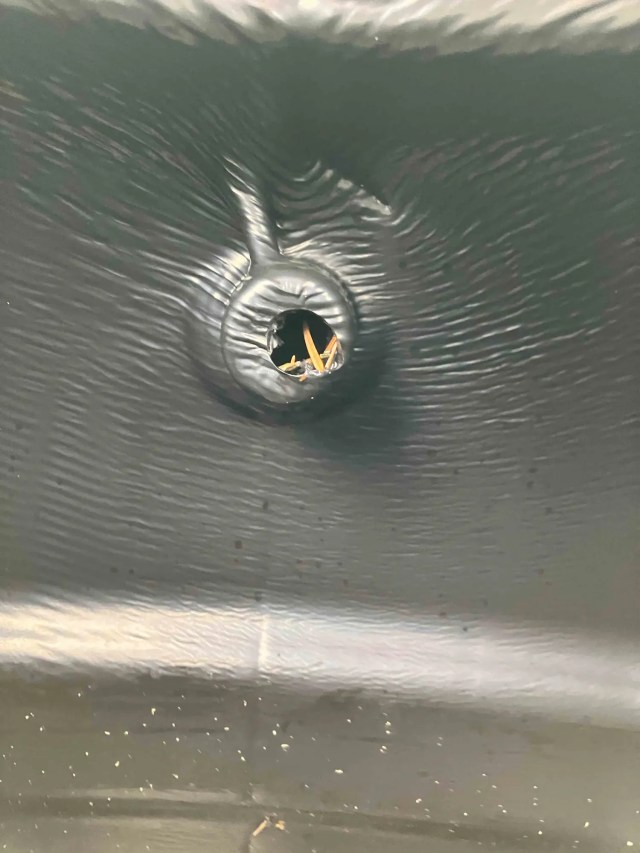
The Stanley Knife—now canonically known as the Stanley Izmel—was summoned, gleaming in the morning light like a prophet with a blade. Barry’s inlet, long the shame of his ministry, was deemed unfit. Too narrow. Too repressive. A mere suggestion of an orifice. And so, with steady hands and only passing regret, the cut was made.
A little off the top. No anaesthetic. No midwife. Just a clean incision and the whisper of prophecy fulfilled. Barry gurgled once. Then sighed, wide-mouthed and open to the rains.
But the transformation was not complete. To fully join the priesthood of irrigation, Barry required regalia.
First, a new brass tap—resplendent, frost-resistant, a gleaming testament to functionality. Where once he wept, now he poured. Where once he dribbled in shame, now he dispensed with purpose.
Then, the corrugated hose—a coiled umbilicus linking Barry directly to the greenhouse guttering. Flexible, ridged, and gloriously obscene, it channelled the heavens into his belly. The circuit was complete. The rain no longer trickled past in disdain—it entered him willingly, generously.
Barry is now more than a water butt.
He is a vessel of covenant. A font of amphibic hope.
A prophet, circumcised by Stanley, gleaming with brass, standing proud beside the shed.
And lo, the frogs will swim strong.
And the hydrangeas flourish.
And Puff—though silent—casts him a glance of begrudging respect.
 THE CULTIVATED STAGE