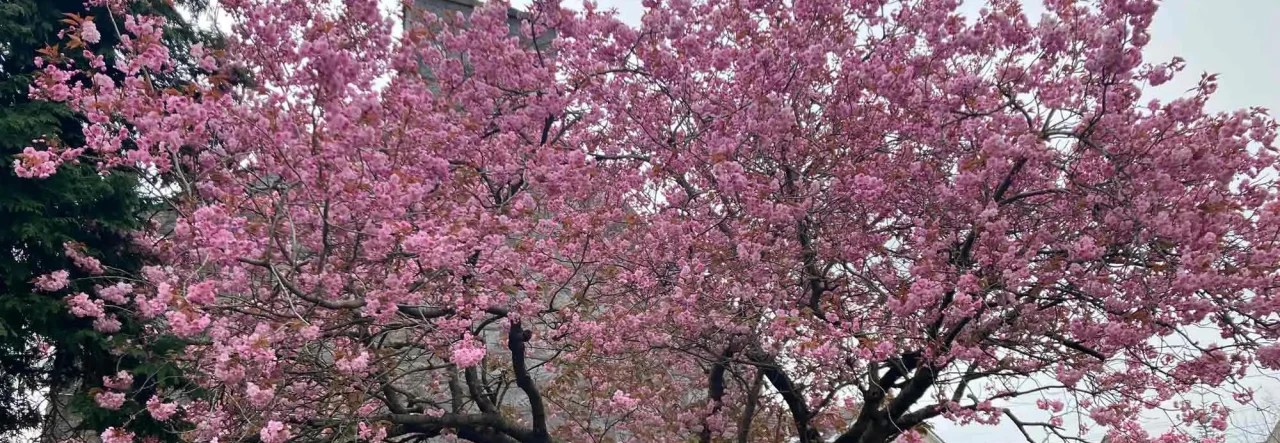
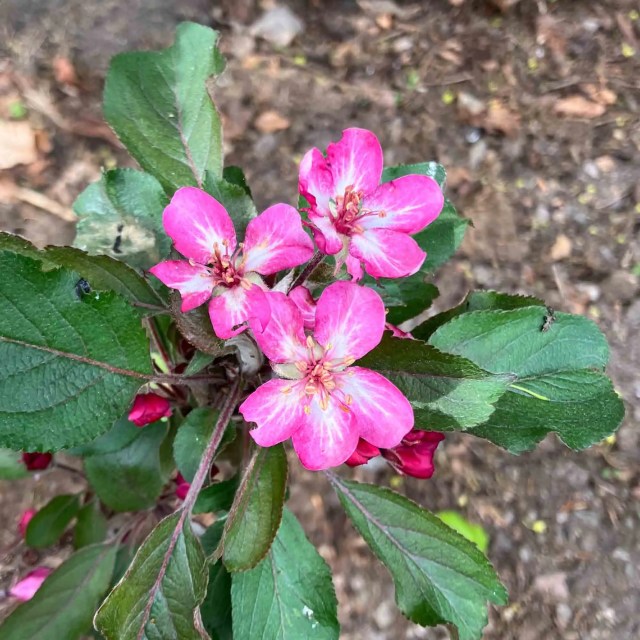
A garden border as a stage—divided not by theme, but by tone. This post introduces Acts I and III of ‘My Name is Red,’ a narrative planting with theatrical intent and emotional depth.
This is not a linear telling. (But then again, what gardener ever planted anything in a straight line—narratively or otherwise?)
The border does not begin at one end and finish at the other—it breathes in three acts, each with its own rhythm, palette, and emotional register. This post introduces the two outer chambers of that unfolding structure: Act I, the entrance, formal and upright; and Act III, the close, shaded and solemn.
These acts were not planted in sequence. Nor are they symmetrical. But they speak to one another—structure to spirit, light to shadow, intention to memory.
In Act I, the stage is set. In Act III, the curtain begins to fall.
What lies between—Act II—is still taking shape. But these are the outer doors to the drama.
Act I: The Scene is Set
No announcements. No fanfare. Just the sound of planting.
The border is now divided. Not by theme, nor by colour, but by intention.
Malus ‘Laura’ opens the scene—an upright capital to the border’s unfolding sentence. Briefly extravagant, then sober again. Her role is clear: to announce without explaining.
Shade falls across the stage from Prunus cerasifera ‘Nigra’, just beyond the border, but very much present. Its effect is felt more than seen—a coolness, a slightly drawn curtain over the light.
Planting follows accordingly.
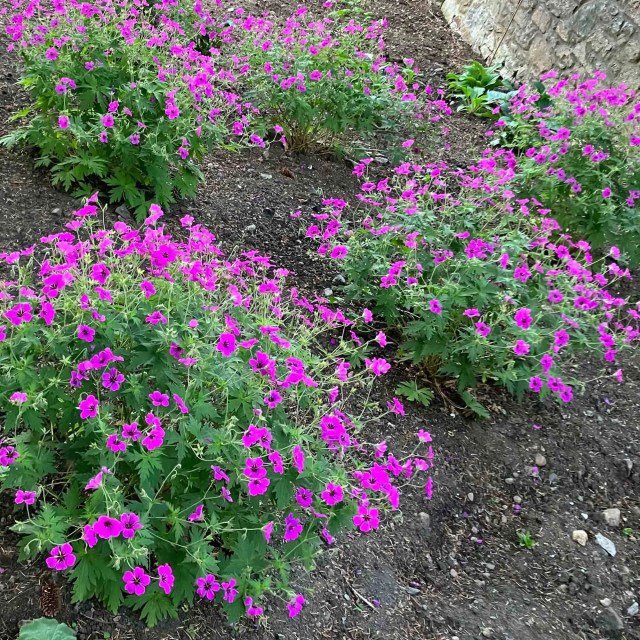
Geranium ‘Patricia’, in disciplined abundance (nineteen, to be exact), weaves repetition through the base of the border. They will do the hard work.
Acanthus spinosus stands near the back, brooding. Not attention-seeking—just waiting to be admired.
Clematis montana ‘Broughton Star’ prepares to scale the rear structures, with plans of grandeur no one has yet approved.
Fritillaria meleagris, including white forms, are planned but not yet planted. Autumn will bring them. For now, they remain notional—like whispered stage directions pencilled in the margin.
In the centre, coiled around his obelisk with faint disdain: Rosa ‘William Lobb’. Mossed. Mauve. Melancholy. Forever preparing for a performance he may or may not deliver—depending on mood, light, and whether he’s feeling particularly seen that day. Not yet blooming. Not yet performing. But unmistakably there.
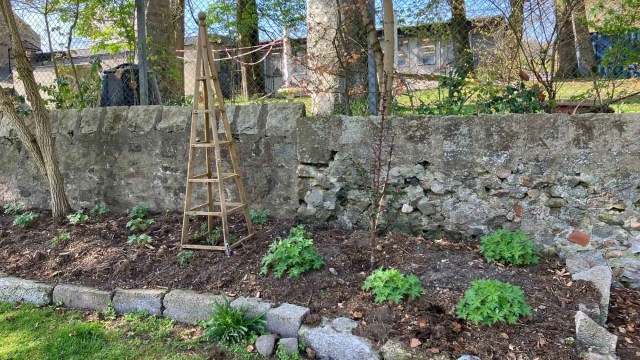
At the close of Act I, two Taxus baccata have been planted side by side. A living buttress. They will hold the division between Acts I and II with silent composure. They do not comment on the plot.
There is structure. There is tone. And there is more to come.
Act III: Scene, Spirit, and Sentiment
This is the final and most introspective act of the border. It is being composed slowly, deliberately, over the course of two seasons, allowing space for the soil to settle and the narrative to unfold.
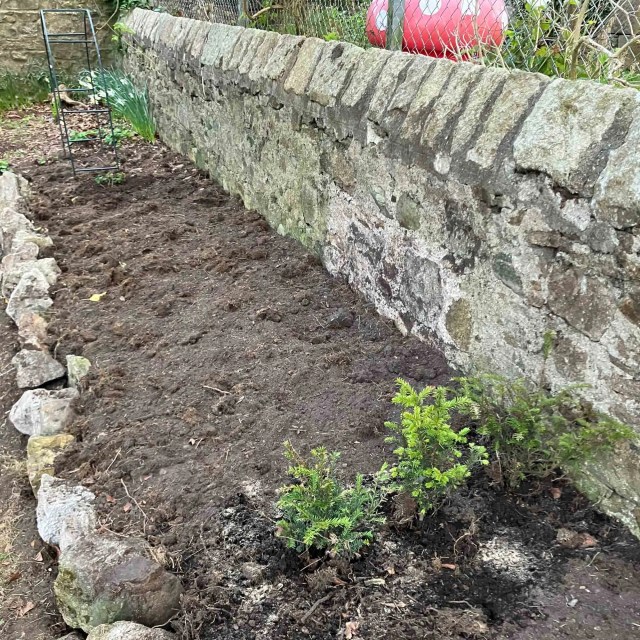
Anchored at its threshold by another pair of yew buttresses—dark, monumental—Act III opens in hush and shade, beneath the long shadow of the Douglas fir. Light comes slantwise here, like memory—filtered, fractured, never full. The palette deepens, the tempo slows. Gone are the golden shouts of earlier acts; what remains are ghosts, old songs, and plants that know how to wait.
At the border’s front, slipping almost onto the grass, Cyclamen coum murmurs into bloom. It drifts outward, pulling the eye toward the fir as if seeking shelter. It’s winter’s whisper, a flicker of pink and magenta while the ground still sleeps.
Helleborus foetidus makes his strange entrance—green, jagged, and faintly disreputable. He doesn’t bloom so much as lurk. Just behind him, with a more composed posture, Anna’s Red takes the stage. Deep crimson, frostbitten and defiant, she opens her blooms with the poise of a singer who knows she’s the overture to tragedy.
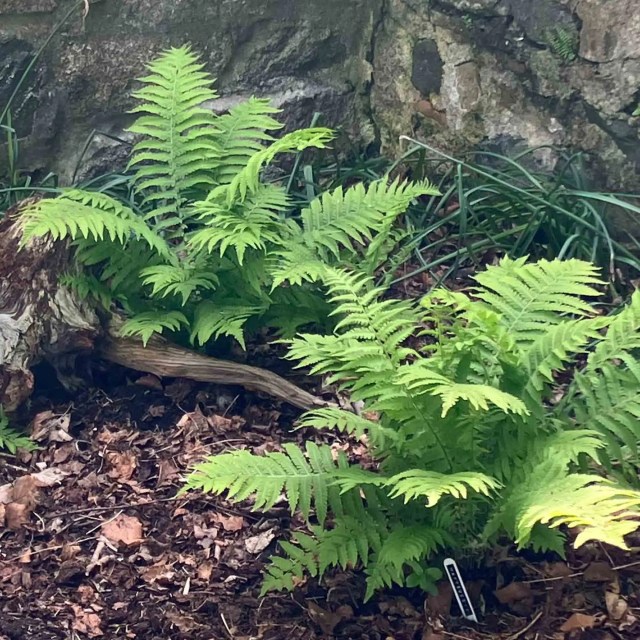
Further back, toward deeper shade, Polygonatum multiflorum bends its arching stems in ritual grace. Dryopteris affinis lines the flanks, golden-scaled and unwavering—the spine of the act. Hedera helix ‘Erecta’ rises among the others like a forgotten relic. Always vertical, always watching.
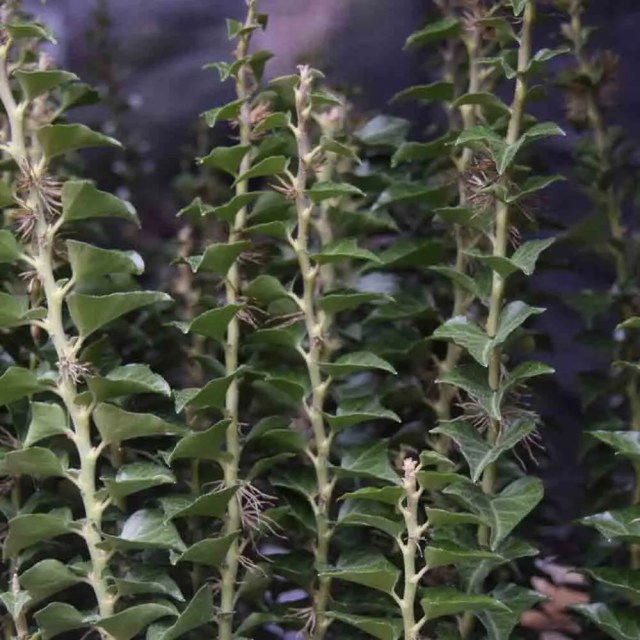
At the back, the great fronds of Matteuccia struthiopteris begin their slow fan dance. These are not dainty ferns—they are green curtains pulled back to reveal the moment we’ve been waiting for.
And then, finally, there is Zander.
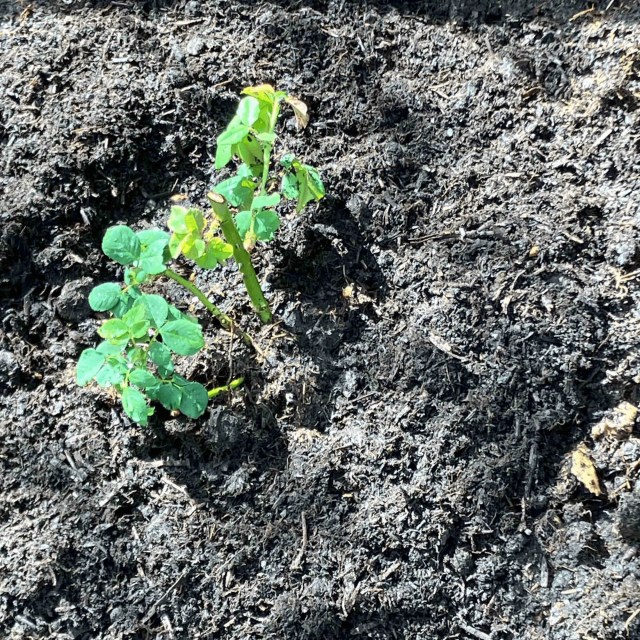
Zander—Rosa ‘Souvenir du Docteur Jamain’—ascends the arch they call Son Canapé Évanoui, the fainting couch that bears him aloft. He is the lead. The velvet tenor. His blooms are deep crimson, his scent heady and intimate. He must be supported, coaxed, adored. He is the Proustian consumptive of the border—elegant, elusive, and forever about to swoon. And when he performs, the world stills. The border closes—not with death, but with decline.
Beneath him, at the base of the arch, a single voice answers in white: Lily of the Valley. Convallaria majalis. Fragrant bells at his feet. Her bloom time meets his like a secret rendezvous—May into June. She upstages no one. But she transforms the moment.
Together, they are contrast and complement. Red and white. Height and ground. Passion and grace.
Just beyond, tucked quietly under foliage, Actaea pachypoda waits. She doesn’t speak now. But later, when the scene has moved on, she will bear her pale, staring berries—and you’ll remember her long after the bloom is over.
Act I Plant List
- Malus ‘Laura’ – The herald. Brief, bright, and already fading as the act begins.
- Prunus cerasifera ‘Nigra’ – The off-stage influence. Casts the longest shadow without ever taking a bow.
- Geranium ‘Patricia’ (x19) – The chorus line. Steady, cheerful, slightly pushy if not watched.
- Acanthus spinosus – The brooding uncle. Doesn’t say much but commands attention when he does.
- Clematis montana ‘Broughton Star’ – The aspiring diva. Not yet climbed, but plotting.
- Fritillaria meleagris (including alba forms) – The stage directions in the margin. Promised, not yet delivered.
- Rosa ‘William Lobb’ – The mauve existentialist. Mossed, mysterious, forever mid-soliloquy.
- Taxus baccata (2, marking Act division) – The stage managers. Quiet, dark-suited, and always present.
Act III Plant List
- Cyclamen coum – Winter’s whisper. Slips across the stage like a forgotten lullaby.
- Helleborus foetidus – The jester with knives. Green, sharp, and slightly suspect.
- Helleborus x hybridus ‘Anna’s Red’ – The tragic soprano. Wounded but radiant.
- Polygonatum multiflorum (Solomon’s Seal) – The ritualist. Graceful, solemn, rhythmic.
- Dryopteris affinis – The quiet strongman. Gold-armoured and dependable.
- Hedera helix ‘Erecta’ – The Gothic sentinel. Upright, eccentric, and utterly unbending.
- Matteuccia struthiopteris (Ostrich Fern) – The curtain. Swells and retreats like memory.
- Rosa ‘Souvenir du Docteur Jamain’ (Zander) – The lead. Velvet, scent, and sorrow.
- Convallaria majalis (Lily of the Valley) – The lace handkerchief to Zander’s consumptive cough. Pure, still, redolent.
- Actaea pachypoda (Doll’s Eyes) – The ghost in the wings. Silent now, unforgettable later.
- Taxus baccata (2, threshold of Act III) – The final doors. Stoic, dark, and always closed behind you.
 THE CULTIVATED STAGE