It was only a matter of time.
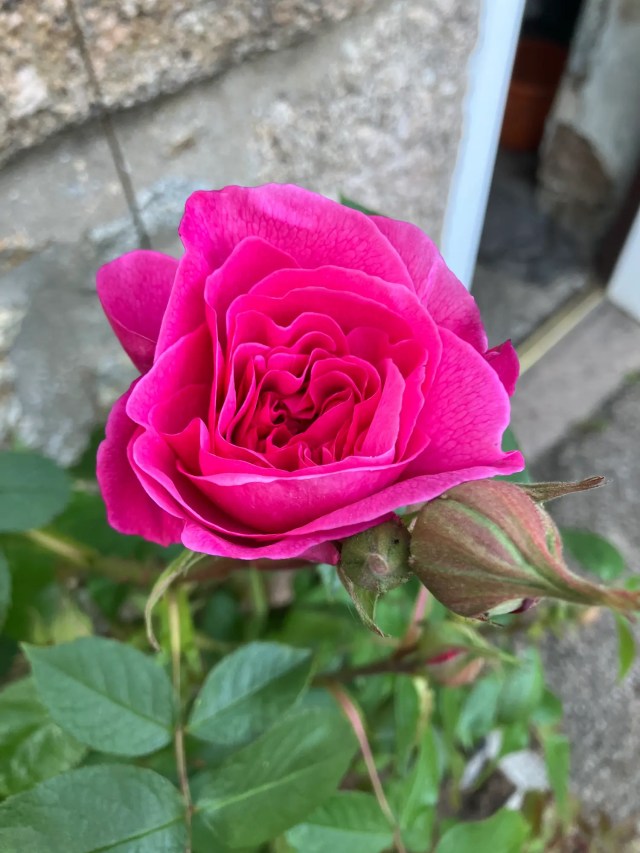
Rosa ‘Gertrude Jekyll’ has opened her first blooms here in the garden, and with them, the curtain rises on what promises to be a thoroughly operatic performance.
Planted two seasons ago against the granite wall by the south-facing trellis, Gertrude has bided her time. But this week, she stepped forward—unfurling one impossibly pink, heavily scented bloom after another. There is no hint of hesitation in her flowering. The colour is pure theatre: a rich cerise that teeters between heritage charm and outright glamour. Her scent—deep, classic, utterly enveloping—is everything the catalogues promise, and then some. It fills the air long before one sees the flower.
She’s not just blooming. She’s arriving.
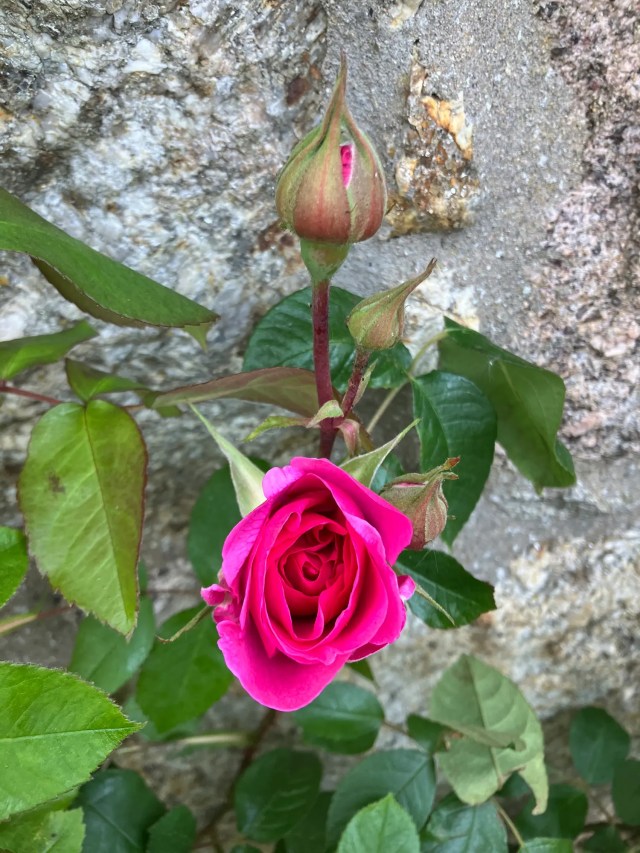
Already there’s an assertiveness in her form. The buds are neatly tucked, the blooms shapely and substantial. There’s a geometry to her petals—a kind of disciplined ruffle—that gives her presence and poise. I suspect this is a rose that thrives on praise but offers little in return unless the lighting and soil conditions suit her. She is, in short, a diva. And I rather like her for it.
She’s currently keeping company with Clematis ‘Comtesse de Bouchaud’, whose pale lilac flowers are just beginning to make their own quiet entrance. It’s an elegant pairing: Gertrude with her rich, velvety glamour, and the Comtesse bringing softness and grace in cooler tones. Whether this becomes a partnership of equals or a rivalry of temperament remains to be seen. For now, the clematis is dutifully weaving its way through the trellis, trailing her pastel silks in Gertrude’s wake like a handmaid with poise.
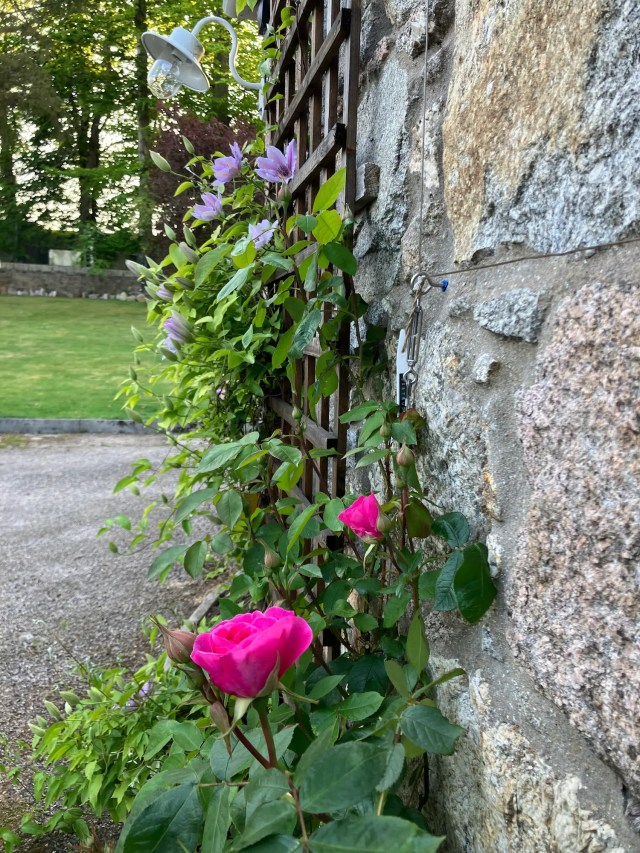
Below are images taken over the last few days—from tightly furled bud to full-face bloom, each one an expression of intent. The growth is healthy, the canes strong, and the bloom count (so far) promising. There’s a certain muscularity to her bearing already—she will not go unnoticed.
She joins The Cultivated Stage not as a newcomer, but as a leading lady who has finally arrived at the theatre she deserves.
 THE CULTIVATED STAGE