Borders as Acts. Plants as Players. The Garden as Theatre.
Category: CHARACTERS & COMPANIONS
Characters & Companions is for the living theatre beyond taxonomy: Puff and his drama, Kevin and his fumes, Agatha’s patrols, Barry the watchful butt. This is where your garden’s inner mythology resides, animated and beloved.
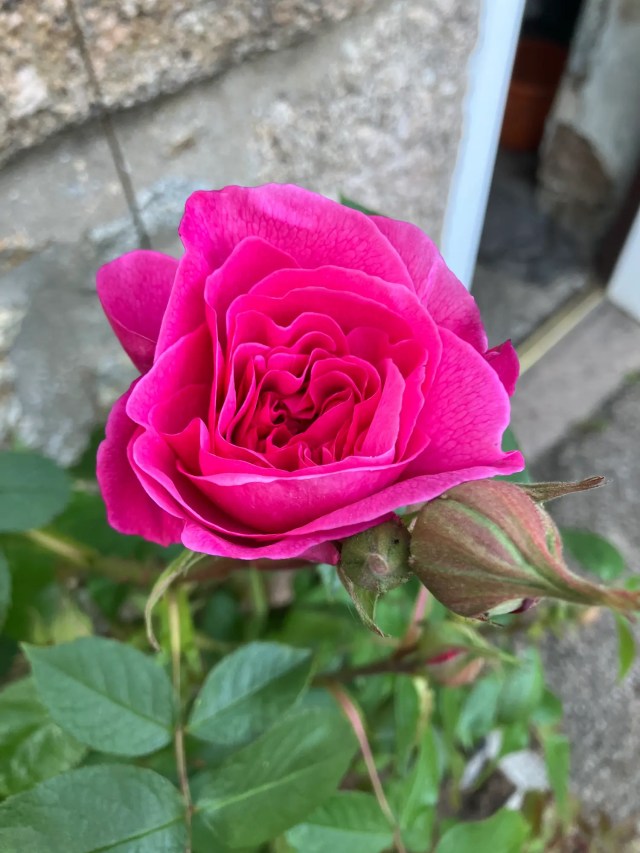
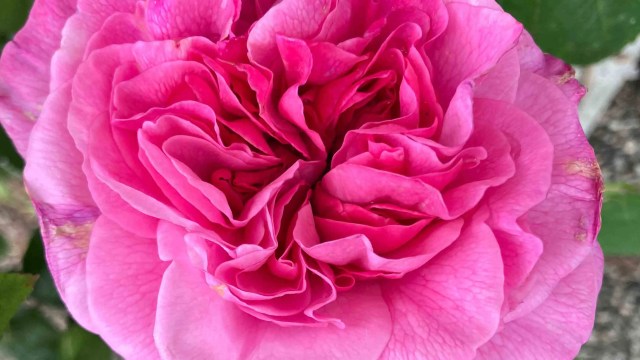
Rosa ‘Gertrude Jekyll’ has opened her first blooms here in the garden, and with them, the curtain rises on what promises to be a thoroughly operatic performance.
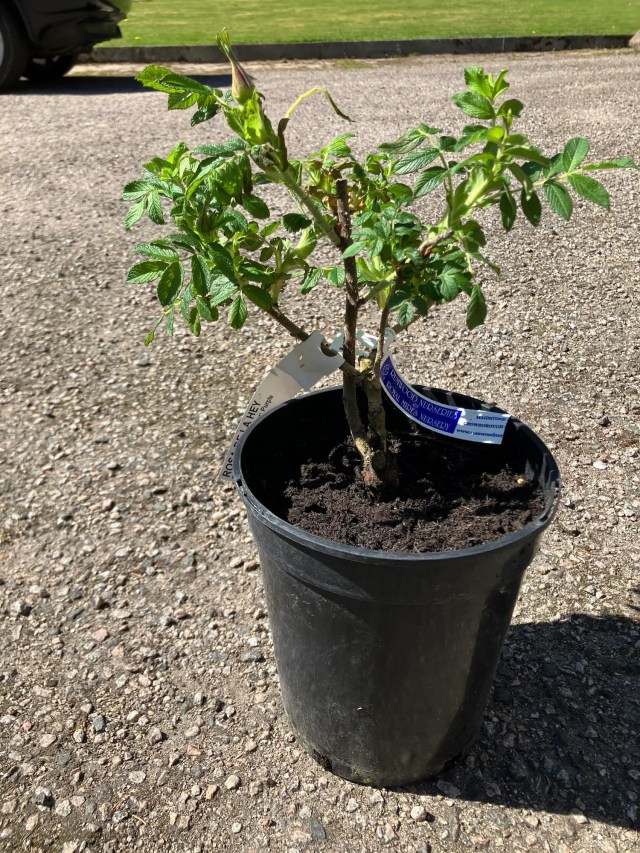
Rosa ‘Roseraie de l’Haÿ’ arrived not with grace, but with grandeur.
Unboxed beneath a rare Aberdeenshire sun, she emerged from her cardboard carriage with the slow disdain of someone well aware of her own myth. Known here simply as Elektra, one word suffices, but her full name commands respect. One bloom. One warning.
Not a garden centre. Not an emporium of scented promises and curated moss. Tesco—between discounted daffodils and a shelf of limp parsley. Wrapped in silence, in cellophane, in clearance. She sat in a white ceramic pot. Once £12, now £9.
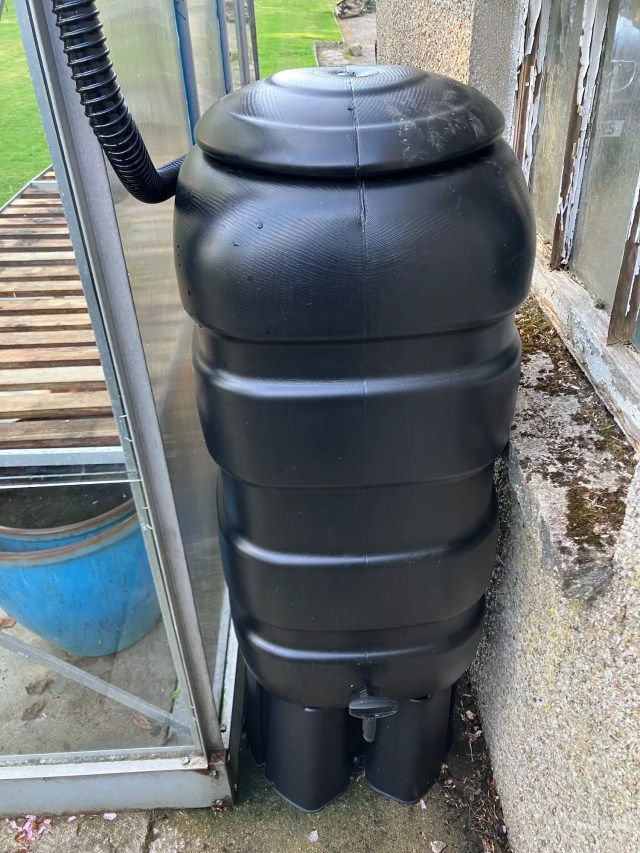
We regret to inform readers that Barry’s initial performance was, by his own admission, a little underwhelming. The connection hose—thin, brittle, barely up to the task — was cruelly split by a jubilee clip in what can only be described as a tragic act of early optimism. Emergency measures were taken: twine was applied, muttered apologies exchanged, dignity somewhat preserved.
If Act I of My Name is Red was the border in its prime—bold, declarative, and upright with conviction—then Act II is the hinge between certainty and doubt. This is not a collapse, but a complication. Not an ending, but a reckoning. And like any good second act, it enters not with a shout, but with a shift—music that leans, tilts, sways. The cello opens the curtain this time, not in triumph but in tension: a low thrum of Piazzolla’s ‘Libertango’, not yet reaching its climax, but already circling something unresolved.
It’s worth noting that ‘Libertango’ is more than just ambience. It is also the melodic seed of Grace Jones’s “I’ve Seen That Face Before”—a song of confrontation, disguise, and memory. Here, too, it becomes a leitmotif. A tango between Rheum and Rose. A dialogue without resolution. And like the border, it asks questions but offers no easy answers.
A garden border as a stage—divided not by theme, but by tone. This post introduces Acts I and III of ‘My Name is Red,’ a narrative planting with theatrical intent and emotional depth.
This is not a linear telling. (But then again, what gardener ever planted anything in a straight line—narratively or otherwise?)
The border does not begin at one end and finish at the other—it breathes in three acts, each with its own rhythm, palette, and emotional register. This post introduces the two outer chambers of that unfolding structure: Act I, the entrance, formal and upright; and Act III, the close, shaded and solemn.
New arrivals, familiar ghosts, and the promise of a future performance.
The new arrivals swept in like a travelling troupe — fresh from the hay-strewn hold, labels stapled to their leaves like boarding passes. A little dishevelled, a little dazed, but humming with potential.
(Originally sparked by a gardening forum grumble and now shouted into the drizzle for all late-blooming roses everywhere.)
Every single year. You’re minding your own business, nursing your garden back to life after winter, when someone posts a photo of their roses—in full, brazen bloom—and there you are, standing in the drizzle, staring at a thorny twig and wondering if you’ve somehow offended the gods.
Act I: Gurgles and Glories (or, The Inlet Anxiety)
Barry arrived with purpose.
Installed beside Facility Alpha (the greenhouse), he was not merely a receptacle but a vessel of destiny. Charged with the sacred duty of collecting rainwater, Barry the water butt stood alert, corpulent, and slightly bashful beneath the guttering. And when the first rains came, he responded: a shy burble here, a tentative glug there—like a nervous baritone warming up backstage.
 THE CULTIVATED STAGE