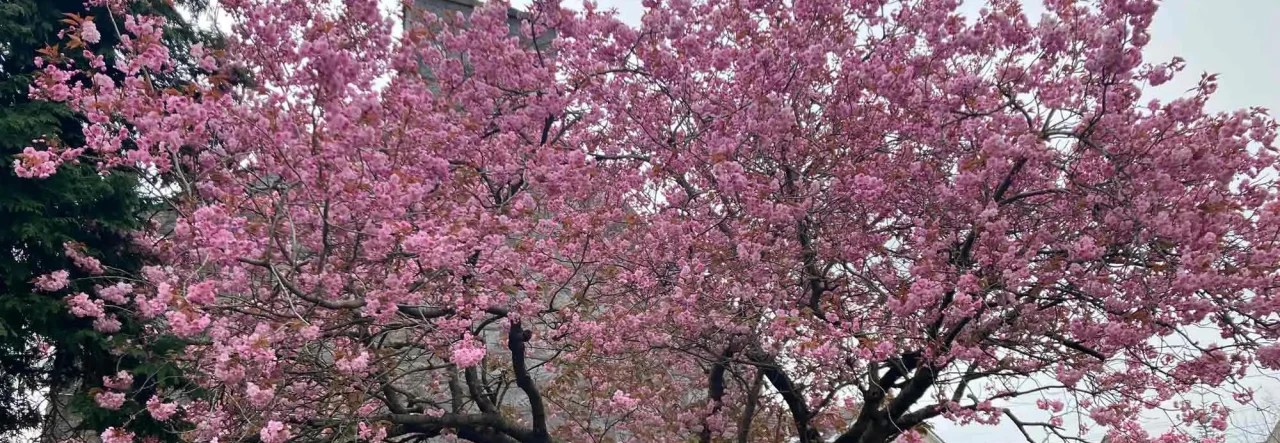
If Act I of My Name is Red was the border in its prime—bold, declarative, and upright with conviction—then Act II is the hinge between certainty and doubt. This is not a collapse, but a complication. Not an ending, but a reckoning. And like any good second act, it enters not with a shout, but with a shift—music that leans, tilts, sways. The cello opens the curtain this time, not in triumph but in tension: a low thrum of Piazzolla’s ‘Libertango’, not yet reaching its climax, but already circling something unresolved.
It’s worth noting that ‘Libertango’ is more than just ambience. It is also the melodic seed of Grace Jones’s “I’ve Seen That Face Before”—a song of confrontation, disguise, and memory. Here, too, it becomes a leitmotif. A tango between Rheum and Rose. A dialogue without resolution. And like the border, it asks questions but offers no easy answers.
THE PREMISE & THE THEME
The border here does not promise ease. It demands adaptation.
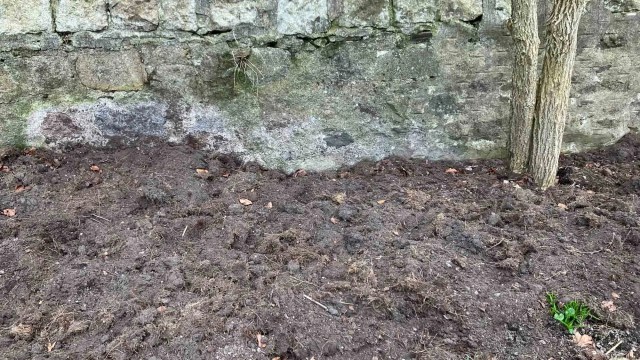
East-facing, the stage is lit with filtered morning light but spared the flat blaze of afternoon. The soil, once left to its own devices, showed signs of strain—free-draining, yes, but edging into dryness too often. Add to that the growing influence of two young beech saplings: still slight in stature, but casting a longer shadow with every season, and sending their fibrous roots into the topsoil with quiet confidence.
This border asks questions of everything that grows in it. And so, we answered.
Before a single cast member took their mark, we intervened—gardener as dramaturg, producer, and grip. A full six inches of compost mulch, laid generously after a deep, soaking rain, now lies like a promise beneath the surface. A wet understory to cradle the roots, cushion the heat, and slow the wicking loss of moisture.
This is not ornamental kindness. This is strategy. This is theatre with sandbags.
Now, the six-metre span of the border reads differently. It still tests, but the terms are fairer. It is still a space of tension, but one where performers have a chance to find footing. And they will need it—for this act is not a pageant of ease. It is flamboyant, but not stable. Glamorous, but increasingly thirsty.
At the centre will be Puff—the Rheum palmatum var. tanguticum—poised like a star before the overture. His foliage is drama incarnate, but his roots need water. Now they’ll find it, tucked under mulch like a secret kept just for him.
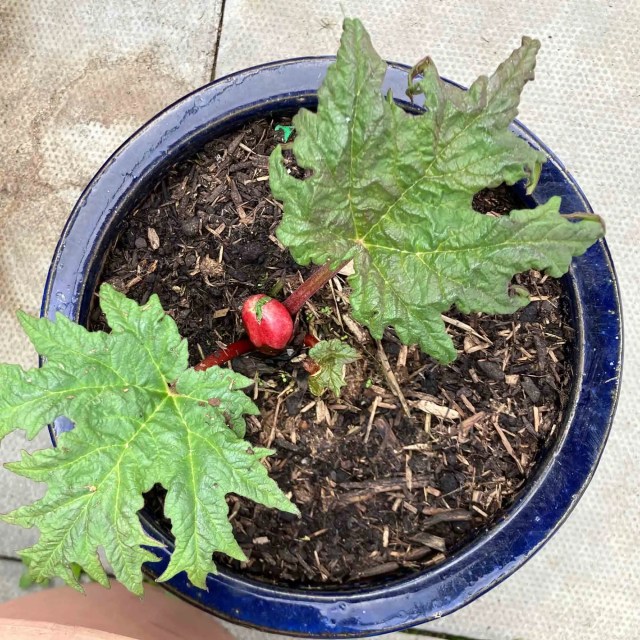
Around him, a cast of shade-tolerant companions gathers: Trilliums and primulas for the lower register; a second Acanthus to repeat Act I’s opening notes; perhaps a second Actaea to echo the spectral whispers of Act III. At the back, Rosa ‘Roseraie de l’Haÿ’ will rise like a velvet curtain, scenting the air with wild sweetness, while Clematis montana var. grandiflora reaches upwards, chasing light through the tangle.
The border now walks a delicate line between cultivation and challenge. The mulch is not luxury—it is necessity, well disguised. A gardener’s sleight of hand. Because if Act II is about ambiguity, about identity in flux, then its success lies not in how easily it flourishes, but in how convincingly it performs.
This is not Versailles. This is a soil-tested stage, and the curtain is about to rise.
THE CAST TAKES THE STAGE
(Or, A Jump to the Left)
We began with symmetry. Of course we did. It’s the instinct of every conscientious gardener—order, rhythm, repeat planting, the classical shapes of a balanced border. Act I had given us a framework: central drama, mirrored restraint, a logic to the choreography.
And for a time, we played along. But Act II resisted. The plants, the site, the narrative—it all began to pull to one side. As though the border itself had stepped out of formation and done, yes, a jump to the left.
This wasn’t rebellion for its own sake. It was response. Response to light, to root competition, to the quiet dominance of the beech saplings. Most of all, it was response to Puff. Once he was placed—he who is neither symmetrical nor subdued—everything else had to lean, to orbit, to react.
The idea of planting in reflection, in balance, began to feel dishonest. Too neat for truth. So, we let the border tilt. Not into chaos, but into character.
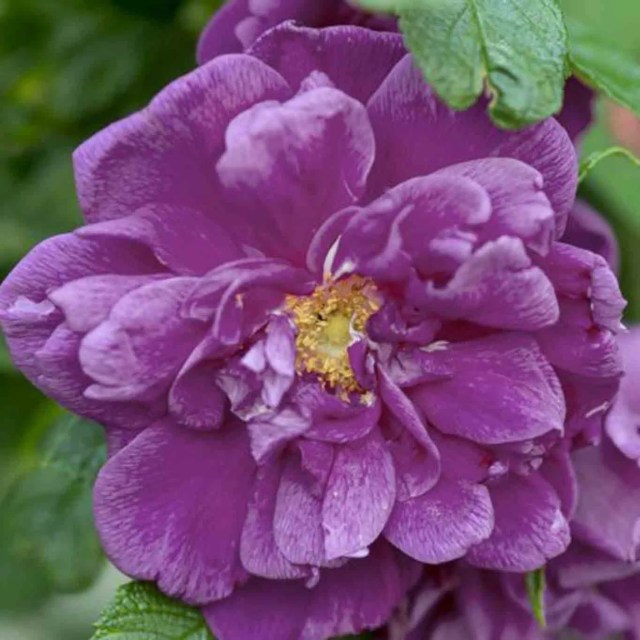
Trilliums clustered not in neat lines but in constellations. Primulas drifted to where the moisture still lingered. The second Acanthus? It no longer mirrored the first—it pulled forward, as though stepping out of the chorus. Even the placement of Rosa ‘Roseraie de l’Haÿ’ became part of this asymmetry—off-centre, pulled toward Puff’s left shoulder, like a velvet-draped confidante in the background of a Sargent portrait.
There is still structure, yes. But it’s the kind that comes from tension, not repetition. Plants lean. Shapes echo, but imperfectly. Height builds where you don’t expect it; shadow falls where you thought you’d cleared it. The choreography is human, not mathematical. Off-beat. Alive.
And as the curtain prepares to rise, it’s this irregular rhythm that feels truest to Act II’s heart. Not a march. A sway.
CAST LIST
ACANTHUS SPINOSA — The Spiny Elder. A bold echo from Act I, reintroduced with tension. Architectural, cynical, and secretly indispensable. Holds the line.
ACTAEA PACHYPODA — The Phantom Witness. Pale eyes (doll’s eyes), ghostly presence. A spectral thread tying into Act III’s velvet tragedy.
ACTAEA SIMPLEX ‘JAMES COMPTON’ — The Undertone. Shadowy, spiced, late-flowering—he waits his turn, then delivers a monologue in September.
BUDDLEJA DAVIDII — The Disruptor. Self-seeding, insistent, impossible to ignore. Often cut, but always returns. Possibly rewritten mid-rehearsal.
CLEMATIS MONTANA VAR. GRANDFLORA — The Chorus in the Rafters. Light, high, tumbling. Offers a sense of upward motion and seasonal exuberance.
DIGITALIS PURPUREA ‘ALBA’ — The Pale Innocent. Poised between wildness and elegance. A soft counterpoint to the darker notes.
DRACUNCULUS VULGARIS — The Villain. Stinking, slinking, scandalous. A plant with opinions and a performance that cannot be forgotten.
FAGUS SYLVATICA — The Watchers. The two young beeches—silent, growing presences whose influence grows with each season. Uncredited, but vital.
GALANTHUS NIVALIS — The Prologue. A memory of Act I’s ending. The first voice heard in winter’s hush. May be gone before the curtain properly rises.
GERANIUM SYLVATICUM ‘ALBUM’ — The Gentle Support. Bright, reliable, woodland inclined. Surrounds Puff like handmaids with white sleeves.
HELLEBORUS × HYBRIDUS ‘HELLO RED’ — The Complication. A rich, unexpected tone. Flowers early, refuses to be background.
PRIMULA DENTICULATA ‘ALBA’ — The Low Hum. Circular, whimsical, quietly constant. Sings the ground layer like a lullaby.
RHEUM PALMATUM VAR. TANGUTICUM (‘Puff’) — The Star. Central. Genderfluid, glamorous, unmissable. The axis on which the border turns.
ROSA ‘ROSERAIE DE L’HAY’ — The Grande Dame. Scented, vigorous, dangerous, deeply coloured. Not central, but commanding. Her entrance is late, but she steals the act.
ROSCOEA PURPUREA — The Surprise Guest. A left-field addition. Appears when least expected. Brings strange beauty. (The ‘Supreme’ to Puff’s Diana Ross.)
TAXUS BACCATA — The Pit Orchestra. Low, steady, evergreen. Anchors the acts. Marks the transitions, never the star, but without him, no one cues their line.
TRILLIUM CUNEATUM / GRANDIFLORUM — The Grounded Oracles. Low and quiet, yet ancient in presence. Their appearance is brief, but meaningful—a nod to the deep woodland past and a whisper of Act III’s monastic stillness.
 THE CULTIVATED STAGE
Maybe the diva will be happier in the chorus and vice-versa. Sometimes it is not possible to be sure, as the Director, after one audition. It has been known for those in the chorus, perhaps an understudy even, to step up into the limelight, if required. Time will tell, I suppose.
LikeLike
One is Glyndebourne and the other Covent Garden.
At Glyndebourne, you arrive in linen and lineage, unfold a picnic with silver cutlery and emotional restraint, and listen to Mozart beneath a soft Sussex sky.
At Covent Garden, you mortgage a kidney for a soggy tea cake in a dim foyer, then weep openly in your seat as Tosca hurls herself from the parapets and takes your overdraft with her.
LikeLike
Very well observed.
LikeLike